
The Complete Guide to Branded Hi Vis Polo Shirts for Australian Workplaces
Discover how to choose, customise, and order branded hi vis polo shirts for your Australian workplace. Tips on decoration, MOQs, and more.

Written by
Troy Maguire
Safety & Workwear
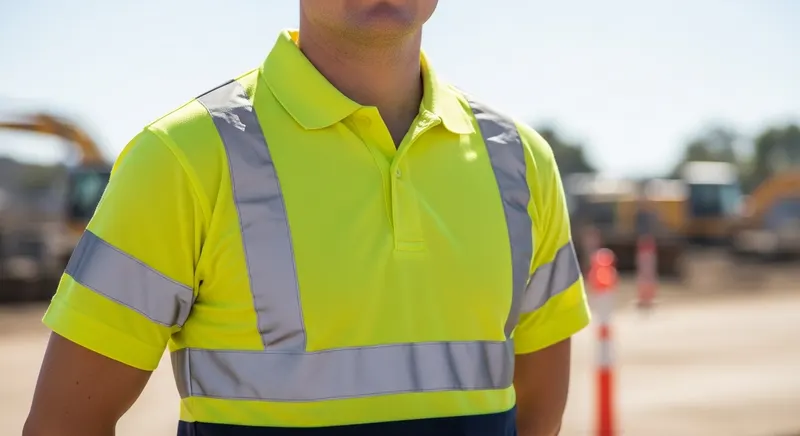
If your team works outdoors, on construction sites, at events, or in any environment where visibility matters, a branded hi vis polo is one of the smartest uniform investments you can make. It ticks two critical boxes simultaneously: it keeps your workers safe and it keeps your brand front and centre. From road crews in Perth to event staff on the Gold Coast, hi vis polos are a staple of Australian workplace culture — and when they’re customised with your logo or organisation’s name, they become a powerful tool for professionalism and brand recognition.
But ordering branded hi vis polos isn’t as straightforward as picking a colour and slapping on a logo. There are compliance standards to understand, decoration methods to consider, and practical decisions around sizing, quantity, and lead times that can make or break your order. This guide walks you through everything you need to know.
What Makes a Hi Vis Polo Different from a Standard Work Shirt?
Before diving into customisation options, it helps to understand what sets a hi vis polo apart from a regular work polo. The defining feature is the high-visibility fabric — typically fluorescent yellow, orange, or lime green — which is specifically designed to make the wearer visible in low-light conditions or busy environments.
In Australia, hi vis garments used in safety-critical workplaces must comply with Australian Standard AS/NZS 4602.1:2011, which governs the design and performance of high-visibility safety garments. This standard covers things like the minimum amount of fluorescent background material and the placement of retroreflective tape — those silver strips that catch headlights and other light sources.
Class Ratings and When They Apply
Hi vis garments in Australia are classified into two main classes:
- Class D (Day) — suitable for daytime use only, these garments use fluorescent material but don’t require retroreflective tape
- Class D/N (Day/Night) — these include retroreflective tape and are required for workers in environments with traffic or poor lighting conditions
If your team works near moving vehicles — on roads, at construction sites, or in warehouses with forklifts — Class D/N is generally the minimum requirement. If you’re outfitting event staff for a daytime festival in Brisbane or a sporting carnival in Adelaide, a Class D polo may be perfectly adequate. Always confirm compliance requirements with your relevant state workplace health and safety authority before placing your order.
Choosing the Right Hi Vis Polo for Your Team
Not all hi vis polos are created equal. The quality, fabric composition, and design features vary significantly between garments, and getting this right affects both comfort and longevity.
Fabric and Comfort
Most hi vis polos are made from a polyester or polyester-cotton blend. A higher cotton content generally means better breathability and comfort, which matters enormously if your team is working outdoors in Queensland’s summer heat or on a busy construction site in Darwin. Look for moisture-wicking properties, UV protection ratings, and mesh panels where possible — your workers will thank you for it.
If your team also needs outerwear, it’s worth exploring hi vis vest jackets and soft shell jackets to round out a complete workwear uniform that transitions across seasons.
Collar and Style Options
Hi vis polos come in several style variations:
- Standard polo collar — the most common, suitable for most workplaces
- Mandarin/banded collar — a cleaner, more contemporary look favoured in some industries
- Long sleeve vs short sleeve — important to consider for sun protection, especially in northern Australia
For environments where the polo is part of a broader uniform, check that the style you choose pairs well with worker shirts and other garments already in rotation. Consistency matters when you’re building a cohesive team look.
Sizing and Inclusivity
Always order across a full size range. A good supplier will offer sizes from XS through to 5XL or beyond, and some will have specific cuts for women. Ignoring size inclusivity is one of the most common mistakes organisations make when ordering workwear in bulk — and it can lead to frustrated team members and costly reorders.
Decoration Methods for Hi Vis Polos
Customising a hi vis polo requires a little more thought than decorating a standard t-shirt. The fluorescent fabric can interact differently with various decoration techniques, so understanding your options is important.
Embroidery
Embroidery is the gold standard for hi vis workwear customisation. It’s durable, professional-looking, and stands up to the kind of tough conditions that workwear faces — repeated washing, physical work, outdoor exposure. A logo embroidered on the chest of a hi vis polo in thread colours that contrast with the fluorescent background (navy, black, or white tend to work well) looks sharp and lasts the life of the garment.
The key consideration with embroidery on hi vis fabric is digitisation — your artwork needs to be converted into an embroidery file, which may involve a one-off setup fee. This is a worthwhile investment for ongoing orders, as the file can be reused whenever you reorder.
Heat Transfer
Heat transfer (including CAD-cut vinyl and digital heat transfer) is a popular choice for more complex logos or when multiple colours are involved. It works well on hi vis fabric and can produce crisp, detailed results. One thing to watch: over time, heat transfers on frequently washed garments can crack or peel, so it’s worth asking your supplier about the wash durability ratings of their specific transfer products.
Screen Printing
Screen printing is less commonly used on hi vis polos, primarily because the curved surfaces and fabric structure make it trickier than printing on a flat t-shirt. That said, it can be done effectively for back prints or large branding areas, particularly on styles with a flatter rear panel. For high-volume orders — think 200+ shirts for a large construction crew across multiple Sydney or Melbourne sites — screen printing can offer cost efficiencies worth exploring.
What to Avoid
Avoid pad printing (it’s for hard surfaces) and avoid any decoration that might obscure retroreflective tape on Class D/N garments. Covering or distorting reflective strips can compromise compliance, which is a serious safety and legal issue.
Budgeting and Ordering Your Hi Vis Polos
Understanding the cost structure before you approach a supplier saves time and avoids surprises.
Minimum Order Quantities
Most suppliers have a minimum order quantity (MOQ) for hi vis polos, typically starting at 10–25 units for embroidery and potentially higher for screen printing. If you’re a small business or organisation needing just a handful of shirts, look for suppliers who offer lower MOQs, though expect to pay a slight premium per unit compared to bulk pricing.
Pricing Tiers
Like most branded apparel, hi vis polos are priced on a tiered structure — the more you order, the lower the cost per unit. A typical pricing structure might look like:
- 10–24 units: higher per-unit cost
- 25–49 units: moderate discount applies
- 50–99 units: more significant discount
- 100+ units: best bulk pricing, often with free or reduced setup fees
Setup Fees and Artwork
Embroidery digitisation fees typically range from $30–$80 as a one-time cost. Screen printing setup fees per colour per location can also add up quickly for complex logos. Submit your artwork as a high-resolution vector file (AI, EPS, or PDF) to avoid artwork redrawing fees. Always request a digital proof before approving your order, particularly with embroidery, so you can confirm placement, size, and thread colour accuracy.
Lead Times
Standard turnaround for branded hi vis polos is typically 10–15 business days from proof approval. If you’re ordering for a project with a firm deadline — a new site opening in Canberra, a council event in Hobart, or a trade show in Melbourne — flag this upfront. Rush orders may be available at a premium, but availability depends on stock levels and production capacity.
Building a Complete Branded Workwear Kit
Hi vis polos are rarely ordered in isolation. Most organisations are building out a broader workwear or branded uniform package, and it makes sense to think about the full picture from the start.
Consider pairing your hi vis polos with:
- Headwear: branded trucker caps are a popular choice for outdoor workers and event staff
- Accessories: a custom umbrella or branded large water bottle or small water bottle adds practical value for teams working outdoors
- Bags: whether it’s a drawstring bag for PPE storage or a merchandise tote bag for event giveaways, bags complement a workwear uniform nicely
- Stationery: for teams that need to carry documentation on site, cheap promo pens and branded stationery items are always useful additions
If you’re putting together a complete welcome kit for new starters, a personalised coffee travel mug or reusable shopping bags can add a thoughtful, sustainable touch alongside the uniform items.
Key Questions to Ask Your Supplier
Before placing your hi vis polo order, get clear answers to the following:
- Does the garment comply with AS/NZS 4602.1:2011, and is it Class D or D/N rated?
- What decoration methods do you recommend for this specific fabric?
- What is the wash durability of the decoration method?
- Can you provide a sample garment before I commit to a full order?
- What are your lead times, and do you offer rush production if needed?
- Do you stock the full size range I need, or will some sizes need to be back-ordered?
Getting these answers upfront avoids costly mistakes and ensures your order meets both safety and aesthetic requirements.
Conclusion: Getting Your Hi Vis Polo Order Right
A well-executed hi vis polo order does more than keep your team safe — it reinforces your brand identity, presents a professional front to clients and the public, and contributes to a cohesive workplace culture. Whether you’re outfitting a small landscaping crew in Adelaide or a large infrastructure project team across multiple Queensland sites, the principles are the same: prioritise compliance, choose the right decoration method, and work with a supplier who understands the unique demands of hi vis workwear.
Key takeaways:
- Always confirm AS/NZS 4602.1:2011 compliance and the appropriate class rating (Day or Day/Night) before ordering
- Embroidery is the most durable and professional decoration method for hi vis polos in most workplace settings
- Submit vector artwork files and always approve a digital proof before production begins
- Order across the full size range from the outset to avoid costly reorders
- Think beyond the polo — a complete branded workwear kit including headwear, outerwear, and accessories creates a far more polished and professional result